Sign in. It’s quick, free and it’s up to you.
An account is an optional way to support the work we do. Find out more.
Sign in. It’s quick, free and it’s up to you.
An account is an optional way to support the work we do. Find out more.
IN ONE OF Dublin’s oldest churches, you’ll find haunting scenes fit for a John Carpenter blockbuster.
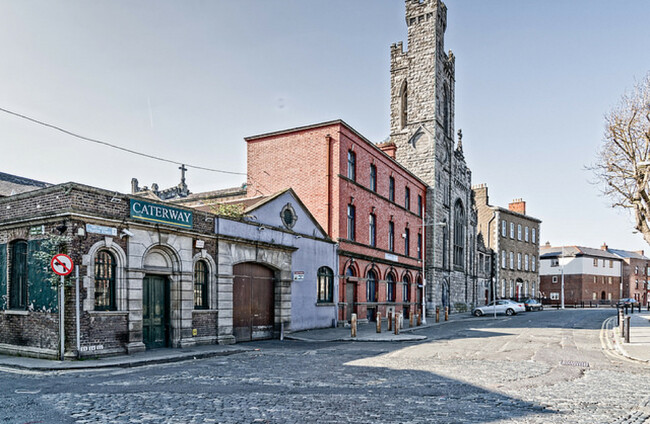
As you pass The Four Courts en route to Smithfield, turn off at Church St and you’ll pass St Michan’s Church. From the outside it already looks imposing, but inside it’s even more macabre.
After checking out Wolfe Tone’s death mask, visitors to St Michan’s can head to the underground crypt to view coffins of Ireland’s ancient elite – and a set of mummified remains.
St Michan’s is now a popular tourist destination among those looking for a more creepy insight into Dublin’s past, largely in part to the group of mummies known among historians as “The Big Four”.
The original St Michan’s Church was built in 1095, before it was further developed in 1686. According to Discover Ireland, St Michan’s was “the only church located on the northside of Dublin city” for the first 580 or so years of its existence.
The structure, as it stands today, was finally completed in 1825. St Michan’s burial chambers hold the remains of important Irish families dating from the seventeenth, eighteenth and and nineteenth centuries.
Today, visitors from around the world come to explore the famous crypts found below the altar. Between the limestone walls, there are five long burial chambers.
In one of the chambers, three open caskets and a collapsed coffin, covered in hundreds of years of dust, contain The Big Four. Off to the side of the burial chamber, you’ll find random bones and skulls around a closed coffin.
So who were these four humans, and how did they come to rest at St Michan’s? Well, that part is unclear.
Ghost Catcher, a site devoted to spectral stories from Ireland and Great Britain, suggests the bodies belonged to an “alleged crusader”, a “thief” and a “nun” – and claims you’ll hear “whispering, murmuring” sounds as you move through the vault.
And how have the mummies remained intact over hundreds of years? Dublin.ie suggests that the “constant dry atmosphere” combined with “methane gas that leaks up from the soggy ground” have persevered the relatively intact remains.
Who needs expensive skincare, eh?
To embed this post, copy the code below on your site








have your say